
Lesco Connection Guide Step by Step
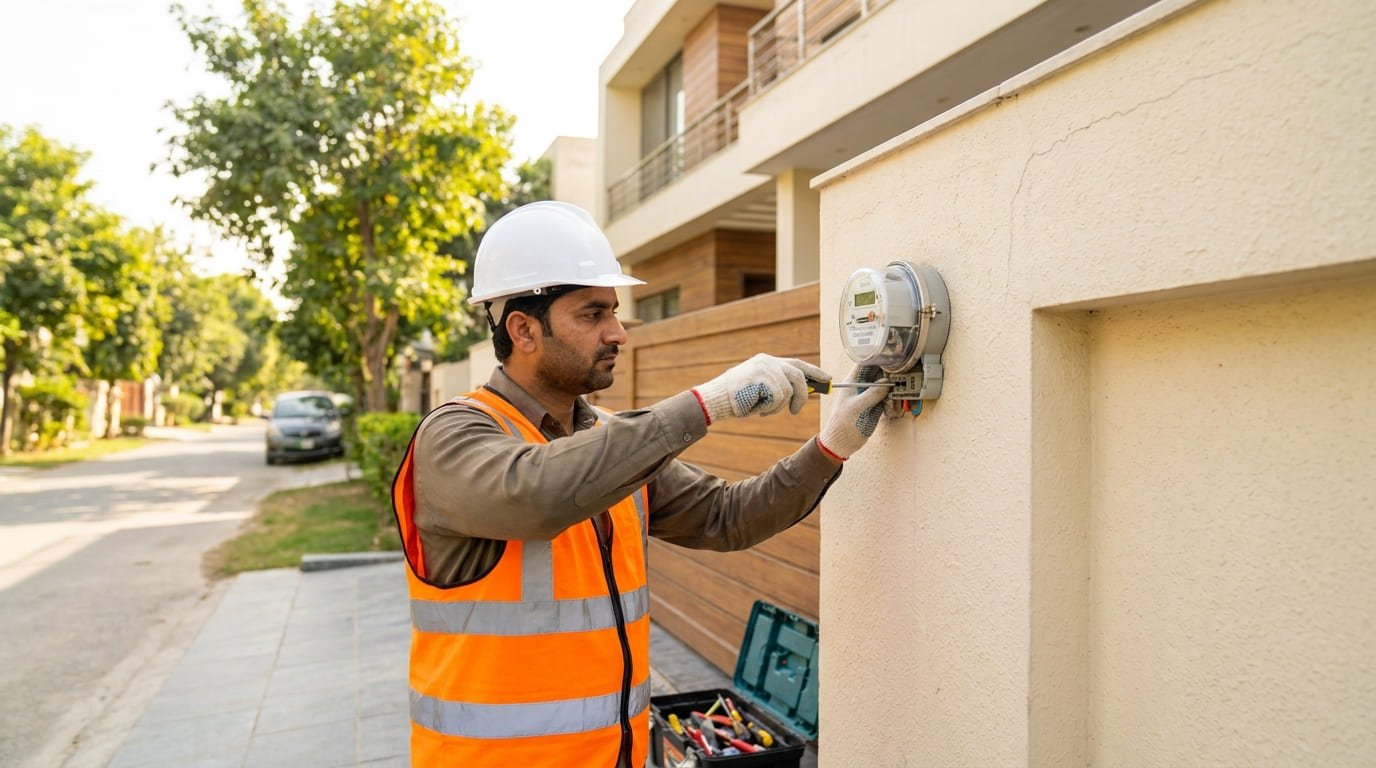
Getting electricity connected to your home or business in Lahore is one of the most important steps you’ll take as a property owner. The Lahore Electric Supply Company, better known as LESCO, serves millions of consumers across Lahore and its surrounding districts. Whether you’re moving into a newly constructed house, starting a commercial venture, or shifting from a temporary supply, understanding the LESCO connection guide from start to finish can save you weeks of back-and-forth.
This guide walks you through every phase of the process — from knowing which connection type you need, gathering the right documents, submitting your application, and paying your fees, all the way to the final meter installation. It’s written for everyday people, not engineers, so even if this is your first time dealing with a utility company, you’ll know exactly what to do.
For More Lesco Connection Guide Check Official webstie Page
What Is LESCO and Who Does It Serve?
LESCO (Lahore Electric Supply Company) is a public sector distribution company operating under the Water and Power Development Authority (WAPDA) framework. It was incorporated as a corporate entity in 1998 and is responsible for distributing electricity across Lahore, Sheikhupura, Nankana Sahib, and Kasur districts.
LESCO manages over 3.7 million registered consumers — residential, commercial, industrial, and agricultural. If you own property in any of these districts, LESCO is your electricity distribution authority. Any new electricity connection, load enhancement, transfer of ownership, or disconnection request must go through LESCO’s official channels.
LESCO Service Territory
| Districts Served | Lahore, Sheikhupura, Nankana Sahib, Kasur |
| Consumer Base | Over 3.7 million registered consumers |
| Established | 1998 (Corporate Entity) |
| Head Office | LESCO Headquaters, Lahore, Pakistan |
| Customer Helpline | 118 (24/7) |
| Website | www.lesco.gov.pk |
Types of LESCO Connections You Can Apply For
Before you submit any paperwork, you need to identify the correct connection category. LESCO classifies connections based on the nature of use and the amount of electricity load required. Applying under the wrong category leads to delays and sometimes outright rejection.
1. Domestic (Residential) Connection
This is the most common type. It applies to houses, apartments, and residential flats where electricity is used for household purposes — lighting, fans, refrigerators, air conditioners, and other domestic appliances. Single-phase connections are standard for small homes, while three-phase connections are issued for larger properties with higher load demands (typically above 5 kW).
2. Commercial Connection
Shops, offices, restaurants, salons, clinics, and any business premises fall under the commercial category. The tariff rates for commercial connections are different from domestic ones, so it’s crucial not to misrepresent your usage type. LESCO conducts spot checks, and using a domestic connection for business purposes can result in penalties.
3. Industrial Connection
Manufacturing units, factories, and large-scale production facilities require industrial connections. These involve much higher load requirements and a more involved application process, often requiring a load feasibility assessment by LESCO engineers.
4. Agricultural Connection
Tube wells, water pumps for irrigation, and farm-based operations qualify for agricultural connections. There are specific subsidized tariff rates for this category under the government’s agricultural policy.
5. Temporary Connection
Construction sites, events, and short-term projects can apply for a temporary connection. These are valid for a limited period and require a separate security deposit. Once the temporary period ends, the connection is officially disconnected unless converted to a permanent one.
6. Bulk Supply / High-Tension Connection
Housing societies, large commercial complexes, hospitals, and educational institutions that receive supply at high voltage and then distribute it internally fall under this category. These require a dedicated transformer and substation setup.
Documents Required for a New LESCO Connection
Documentation is where most applications stall. People show up at LESCO offices without the right papers, wait in long queues, and then get turned away. Having everything prepared in advance eliminates that frustration entirely.
For a Domestic (Residential) Connection
- Copy of your National Identity Card (CNIC) — applicant’s own
- Proof of property ownership (registered sale deed, allotment letter, or possession letter issued by a housing authority)
- No Objection Certificate (NOC) from the building owner if you are a tenant
- Site plan or layout plan of the premises
- Copy of the property map from the relevant development authority (LDA, DHA, etc.)
- Utility bill of an adjacent property (neighbor’s LESCO bill) to help verify location
- Affidavit on stamp paper if the property documents are under litigation or incomplete
For a Commercial Connection
- CNIC of the business owner or authorized representative
- Tenancy agreement or ownership documents for the commercial premises
- Trade license or business registration certificate (if applicable)
- Load details form specifying all electrical equipment and their wattage
- NOC from the property owner (for tenants)
- Site plan of the commercial premises
For an Industrial Connection
- All documents listed for commercial connections
- Factory registration certificate or incorporation documents
- Detailed load list prepared by a licensed electrical contractor
- Approval from the relevant Environmental Protection Agency (EPA) for factories above a certain size
- Approval from the Directorate of Industries (where applicable)
Note: LESCO regularly updates its required document list. Always confirm the latest requirements with your local subdivision office or by calling the helpline at 118 before visiting.
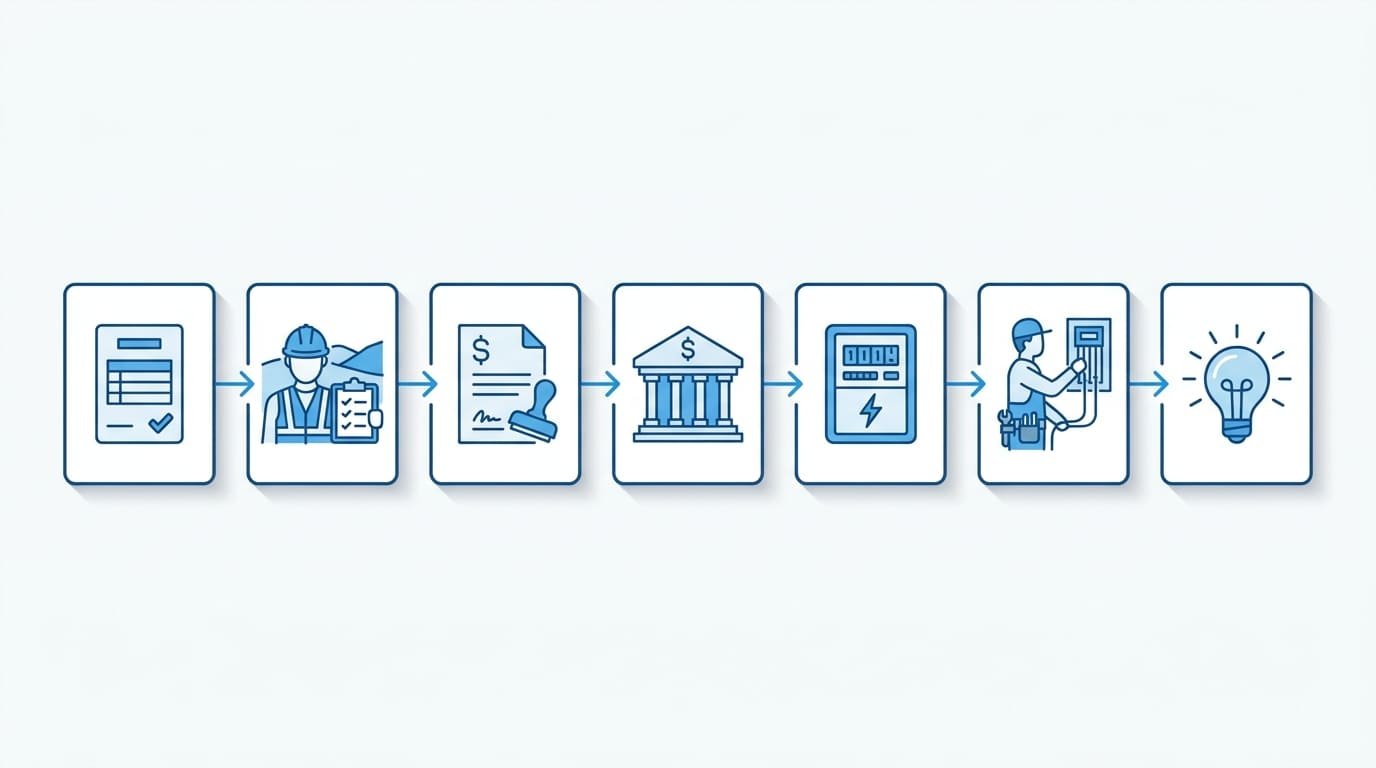
Step-by-Step Process: How to Apply for a New LESCO Connection
Now that you know what type of connection you need and what documents to gather, here’s the complete application process broken down into clear, sequential steps.
Step 1: Identify Your Subdivision Office
LESCO operates through a network of subdivision offices across Lahore and the other districts it serves. Your application must be submitted to the subdivision office that has jurisdiction over the area where you want the connection installed. You can find your subdivision office by calling LESCO’s helpline at 118 or by visiting www.lesco.gov.pk.
Step 2: Obtain the Application Form
Connection application forms are available free of cost at your local LESCO subdivision office. As of 2024, LESCO has also made these forms available on its official website for download. Fill out the form carefully and completely. Any blank fields or errors can delay processing.
The form asks for:
- Applicant name and CNIC number
- Complete address of the premises
- Type of connection (domestic/commercial/industrial/agricultural)
- Estimated load requirement (in kilowatts)
- Phase requirement (single-phase or three-phase)
Step 3: Submit Your Application with Documents
Attach all required documents to the filled application form and submit everything at the subdivision office. Staff will check the form and documents at the counter. If something is missing, they will issue a deficiency slip telling you exactly what to bring next time. It’s always better to ask for this in writing so there’s no ambiguity.
Step 4: Site Survey by LESCO Engineers
Once your application is accepted, LESCO assigns a team to conduct a physical survey of your premises. This survey typically happens within 7 to 15 working days of application acceptance. During the survey, engineers assess:
- Whether the nearest transformer has sufficient capacity for your new load
- The distance from the existing distribution line to your property
- Any physical obstacles or infrastructure work required
- Whether a new transformer or feeder extension is needed
Be present at the site during the survey. Engineers may have questions that only the applicant or property owner can answer.
Step 5: Demand Notice Issuance
Based on the survey findings, LESCO issues a Demand Notice. This is a formal document that states:
- The total cost of installing the connection (including service line, meter, and any infrastructure work)
- The security deposit you must pay
- Any special conditions attached to your connection
Review the demand notice carefully. If you feel any charges are incorrect or excessive, you have the right to file an objection with the LESCO Divisional Superintendent before making payment.
Step 6: Pay the Demand Notice Amount
Once you’re satisfied with the demand notice, pay the required amount. Payment can be made at:
- Any designated bank branch (usually MCB, HBL, or UBL — as specified on your demand notice)
- LESCO’s designated payment counters at subdivision offices
- Through mobile banking apps linked to your bank account (check LESCO’s website for updated payment partner lists)
Keep the payment receipt safe. You will need to submit it to the subdivision office as proof of payment.
Step 7: Meter Installation
After receiving your payment confirmation, LESCO schedules the meter installation. A team comes to your premises, installs the electricity meter, runs the service line from the distribution pole to your premises, and energizes the connection. The timeline from payment to energization is typically 7 to 21 working days, though it can vary by area and workload.
Once the meter is installed and the supply is active, your connection is officially live. You will start receiving monthly bills from LESCO based on your registered tariff category.
LESCO Connection Charges and Security Deposit
One of the most common questions people have before applying is how much the whole process will cost. The answer depends on several factors: the type of connection, the load in kilowatts, the distance of your property from the nearest distribution infrastructure, and whether any new transformer or line extension work is required.
Security Deposit
The security deposit is a refundable amount held by LESCO for the duration of your connection. It acts as a guarantee against unpaid bills. For domestic single-phase connections, the deposit typically ranges from Rs. 2,000 to Rs. 6,000, though it can be higher for larger loads. Commercial connections carry higher deposits proportional to the sanctioned load. This amount is refundable when you permanently disconnect your connection.
Service Connection Charges
These are one-time charges for the physical work of running the service line from the pole to your meter. They depend on the distance involved. LESCO publishes a schedule of these charges, which is available at subdivision offices. Shorter distances to the nearest pole mean lower service line costs.
Development Charges
If your area requires infrastructure expansion — a new transformer, new distribution poles, or line extensions — LESCO may assess development charges on the applicant or on the developer of a housing scheme. These can be significant for remote or newly developing areas.
| Connection Type | Approximate Security Deposit (PKR) |
| Domestic (Single Phase) | Rs. 2,000 – Rs. 6,000 |
| Domestic (Three Phase) | Rs. 8,000 – Rs. 20,000 |
| Commercial (Small) | Rs. 10,000 – Rs. 30,000 |
| Commercial (Large) | Rs. 30,000+ |
| Industrial | Assessed individually |
Note: These figures are approximate as of 2024-2025 and are subject to change. Always confirm exact amounts with your subdivision office.
Online Application and Digital Services
LESCO has progressively digitized several of its services in line with Pakistan’s broader push toward e-governance. While many consumers still visit offices in person, there are now digital options worth knowing about.
LESCO Online Portal
The LESCO website (www.lesco.gov.pk) allows consumers to:
- Download connection application forms
- Submit online complaints and track their status
- View and pay electricity bills online
- Apply for duplicate bills
- Check meter reading history
LESCO Mobile App
LESCO’s official mobile application is available on Android. It lets consumers manage billing, lodge complaints, and track service requests without visiting an office. The app is particularly useful for following up on your new connection application status.
SMS and WhatsApp Services
LESCO also provides bill inquiry and complaint services via SMS. Consumers can send their reference number to LESCO’s designated short code to receive their latest bill details. Some divisions have also started accepting complaint submissions via WhatsApp, though this varies by subdivision.
Common Mistakes and How to Avoid Them
After speaking with consumers who have gone through the LESCO new connection process, the same problems come up repeatedly. Knowing these pitfalls in advance can save you significant time and frustration.
Mistake 1: Applying Under the Wrong Connection Category
Using a domestic tariff for commercial or business use is a serious issue. LESCO inspectors conduct unannounced visits, and if they find a mismatch between registered use and actual use, you’ll face arrears billed at commercial rates plus penalties. Always apply for the category that accurately reflects your usage.
Mistake 2: Incomplete Documentation
The single biggest cause of delayed applications is missing documents. The ownership proof is the most commonly forgotten item — especially in cases where property was inherited or where the title hasn’t been formally transferred. Sort out your property documentation before applying.
Mistake 3: Not Being Present for the Survey
LESCO survey teams may not wait long or return easily. If you miss the survey appointment, your application goes back into the queue. Ensure someone is available at the site on the survey date. Ask the subdivision office for the expected date range once your application is accepted.
Mistake 4: Paying the Wrong Amount or to the Wrong Account
Always verify the bank branch and account number listed on your demand notice before paying. Payments to incorrect accounts take considerable time to rectify and delay your connection significantly. If you’re unsure, confirm with the subdivision office staff before visiting the bank.
Mistake 5: Not Keeping Copies of Documents
Keep photocopies of everything you submit. In rare cases, documents can be misplaced within the system. Having your own copies means you can quickly resubmit without starting over.
Load Enhancement: Upgrading Your Existing LESCO Connection
If you already have a LESCO connection but need more electricity capacity — perhaps because you’ve added air conditioners, a new floor, or business equipment — you need to apply for load enhancement. This is a separate process from a new connection but follows a similar workflow.
How Load Enhancement Works
You submit an application at your subdivision office requesting an increase in your sanctioned load. LESCO engineers survey your premises again, and based on the available transformer capacity and line capacity, they either approve the enhancement directly or require infrastructure upgrades.
If the existing transformer in your area is already at full capacity, LESCO may install an additional transformer to serve your enhanced load. This can add time and cost to the process.
Documents for Load Enhancement
- Application form for load enhancement
- Copy of your existing consumer number/reference number
- CNIC of the registered consumer
- Details of the additional load being requested (appliances or equipment)
- Latest paid LESCO bill
Transferring a LESCO Connection to a New Owner
When a property changes hands, the electricity connection registered in the previous owner’s name needs to be transferred to the new owner. This is called a Consumer Name Transfer or Change of Ownership.
Process for Name Transfer
- Both the old and new owner must visit the LESCO subdivision office together (or the new owner can submit a No Objection Certificate from the old owner)
- Submit CNIC copies of both parties
- Provide proof of ownership transfer (registered sale deed)
- Clear any outstanding dues on the existing connection before transfer is processed
- Pay the nominal name transfer fee
LESCO generally processes name transfers within 7 to 14 working days after all documents and dues are cleared.
Complaints and Escalation: What to Do When Things Go Wrong
Unfortunately, delays, billing errors, and poor service quality are realities that some consumers face. Knowing your rights and how to escalate makes a significant difference.
First Level: Subdivision Office
Always start with the subdivision office responsible for your area. Lodge your complaint in writing and ask for a complaint reference number. This creates an official record. Most routine issues — wrong billing, delay in connection, meter problems — are resolved at this level.
Second Level: LESCO Helpline (118)
LESCO’s 24/7 helpline at 118 accepts complaints and can escalate matters that aren’t being resolved at the subdivision level. Note your complaint number and follow up if you don’t receive a response within the timeframe given.
Third Level: NEPRA (National Electric Power Regulatory Authority)
If LESCO fails to resolve your issue satisfactorily, you can escalate to NEPRA, which is the federal regulator for Pakistan’s electricity sector. NEPRA has a consumer services cell that handles unresolved complaints against distribution companies. Their website is www.nepra.org.pk.
NEPRA’s intervention is typically a last resort, but it carries significant weight. Distribution companies are bound by NEPRA’s licensing conditions and performance standards.
Tips from Experienced Consumers and Contractors
Talking to people who have been through the process — electricians, property developers, and long-time Lahore residents — reveals some practical wisdom that isn’t written in any official guide.
- Visit the subdivision office in the morning. Staff tend to be more attentive earlier in the day, and you’ll get your questions answered faster.
- Build a relationship with the staff at your subdivision office. Being polite and patient goes a long way in getting things processed smoothly.
- Hire a licensed electrician for your internal wiring before applying. LESCO inspectors may check internal wiring compliance before approving your connection.
- For commercial connections, get a professional load calculation done by a licensed electrical engineer. Undercounting your load means your connection gets saturated quickly; overcounting means higher deposits.
- Follow up every 7 to 10 days. Applications can sometimes sit in a queue without active follow-up. A polite inquiry keeps your file moving.
- Join local area Facebook groups or WhatsApp groups for your neighborhood. Residents often share real-time updates about LESCO processes, which subdivision offices are efficient, and what issues to expect.
Frequently Asked Questions (FAQ)
Q1: How long does it take to get a new LESCO connection?
For a straightforward domestic connection in an established area with existing infrastructure, the process typically takes 4 to 8 weeks from application to energization. Complex cases involving transformer installation or load feasibility assessments can take 3 to 6 months. Following up regularly and ensuring your documents are complete from the start significantly reduces wait times.
Q2: Can I apply for a LESCO connection online?
LESCO has digital services available on its website (www.lesco.gov.pk), including downloadable application forms and online complaint tracking. However, the formal application submission — including document verification and payment processing — still requires a visit to the subdivision office for most connection types as of 2025.
Q3: What is the LESCO consumer helpline number?
LESCO’s 24/7 consumer helpline number is 118. You can call this number for complaints, billing inquiries, new connection status updates, and emergency fault reporting. The helpline is toll-free from PTCL landlines.
Q4: How is the security deposit refunded when I disconnect my connection?
When you apply for a permanent disconnection, LESCO deducts any outstanding dues from your security deposit and refunds the remainder. The refund is typically processed within 30 to 60 days of disconnection. You can request a refund in the form of a bank transfer or demand draft.
Q5: Can a tenant apply for a new LESCO connection?
Yes, a tenant can apply for a new connection with the property owner’s No Objection Certificate (NOC). The NOC must be on stamped paper, duly signed by the property owner, and should explicitly authorize the tenant to apply for an electricity connection. Both the tenant’s and owner’s CNIC copies must be included.
Q6: What happens if the transformer in my area is overloaded and cannot take new load?
If the area transformer is at full capacity, LESCO will assess whether a new transformer needs to be installed. In housing schemes, this cost is often borne by the developer. For individual residential applications, LESCO may charge development charges or assess costs on a case-by-case basis depending on the load requirement and prevailing policies.
Q7: Can I get a three-phase connection for my house?
Yes. If your household load exceeds approximately 5 kW or you have three-phase equipment, you can apply for a three-phase domestic connection. The application process is the same, but you’ll need to specify three-phase requirements on your application form and load list. Security deposit and service connection charges will be higher for three-phase connections.
Q8: What should I do if my LESCO meter is faulty or running fast?
Lodge a written complaint at your subdivision office or call 118. LESCO is obligated to test your meter within a defined period under NEPRA’s service quality standards. If the meter is found faulty, LESCO adjusts your bills accordingly. You can also request a meter test in writing — if the meter is found to be accurate, you may be charged a nominal testing fee.
Lesco Duplicate Bill Check Online Click Here

LESCO is a utility information platform that provides simple and accurate guides about electricity bills, tariff rates, unit calculation, taxes, and billing systems in Pakistan.
It helps users understand slab system, peak hours, protected vs unprotected categories, and manage their electricity usage more effectively.